
A ship-to-shore gantry crane (STS crane), also called a quay crane or container crane, is the workhorse of a modern container terminal. As the primary equipment for loading and unloading containers between a cargo vessel and the quay, it directly affects port throughput, vessel turnaround time and operating efficiency.
Henan Mine Crane, a Chinese crane manufacturer with more than 30 years of experience, designs high-performance STS gantry cranes for mega-ports, ultra-large container vessels and demanding marine environments.
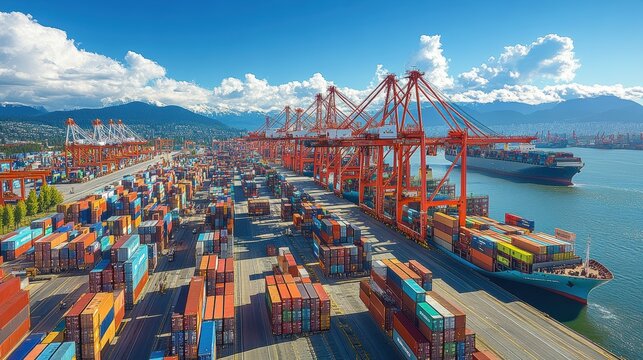
What Is a Ship-to-Shore Gantry Crane?
An STS gantry crane is a large dockside gantry crane designed to load and unload intermodal containers from container ships. Mounted on rails along the quay edge, it has a horizontal boom extending over the ship’s deck. A trolley-mounted telescopic spreader locks onto standard 20-foot and 40-foot containers and transfers them between the vessel and the dock.
Also known as a quay crane or container gantry crane, the STS crane is essential infrastructure for major container ports. With ultra-large container vessels carrying more than 20,000 TEU, terminals increasingly need high-capacity, high-efficiency ship-to-shore equipment. Henan Mine STS cranes can be engineered for 30 tons to more than 100 tons of lifting capacity, outreach up to 70 meters and lifting heights above 50 meters.
Key Components of an STS Gantry Crane
- Gantry frame and legs: The main steel structure supports the boom and trolley, with seaside and landside legs travelling on quay rails.
- Boom or jib: The horizontal beam extends over the vessel and carries the trolley track; a luffing boom can be raised to clear tall ship superstructures.
- Trolley and spreader: The carriage travels along the boom with a telescopic spreader for 20-foot and 40-foot containers.
- Hoisting mechanism: High-capacity electric motors and winches raise and lower the spreader and container load.
- Gantry travel system: Wheels or bogies move the entire crane along quay rails for positioning.
- Operator cabin: The control station gives the operator a clear view of container handling.
- Electrical and control system: PLC controls, anti-sway functions and automation options improve precision and efficiency.
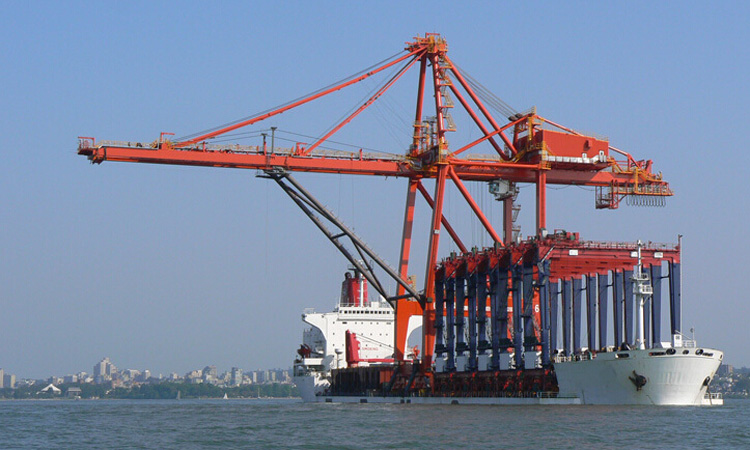
Main Technical Specifications
STS cranes can be configured to suit vessel size, quay layout, throughput targets and local operating conditions.
| Parameter | Specification Range |
|---|---|
| Safe working load (SWL) | 30-120 tons under spreader |
| Maximum outreach | 30-70 m |
| Backreach | 10-25 m |
| Lifting height above rail | 25-55 m |
| Lifting height below rail | 12-20 m |
| Gauge, or rail span | 15-35 m |
| Hoist speed | 45-90 m/min loaded; 90-180 m/min empty |
| Trolley speed | 120-240 m/min |
| Gantry travel speed | 30-60 m/min |
| Power supply | 380 V / 440 V / 690 V, 50/60 Hz, 3 Ph |
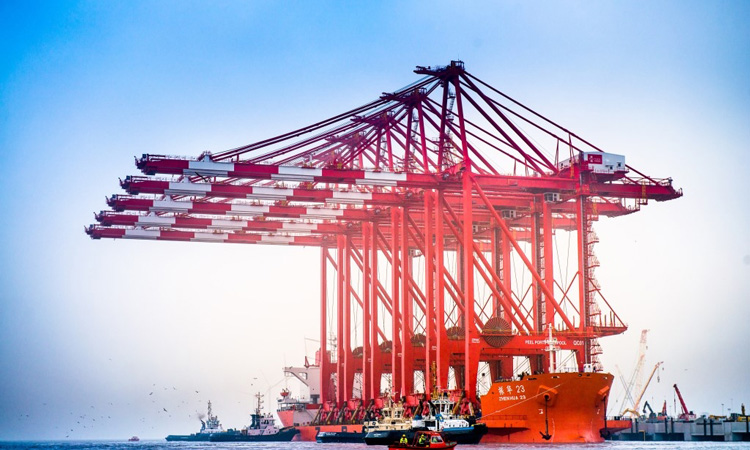
Types of Ship-to-Shore Gantry Cranes
1. Conventional single-lift STS cranes
The standard workhorse for many ports, designed to lift one 20-foot or 40-foot container at a time. It offers reliable, cost-effective handling for medium-volume terminals.
2. Twin-lift or twin-20 STS cranes
A twin-lift spreader can handle two 20-foot containers side by side, effectively doubling productivity on suitable 20-foot container operations.
3. Dual-trolley STS cranes
Two independent trolleys divide ship-side and landside work, reducing cycle time and increasing terminal throughput in high-volume operations.
4. Automated or remote-controlled STS cranes
Automation-ready cranes support semi-automated or fully remote-controlled operation with positioning, anti-collision and monitoring systems.
Applications and Industries
- Container terminals handling feeder vessels through 24,000+ TEU mega-ships.
- Multipurpose ports combining container traffic with breakbulk cargo.
- Inland river ports serving feeder and river-container operations.
- Transshipment hubs at major international shipping routes.
- Offshore and floating terminals with specialized marine transfer requirements.
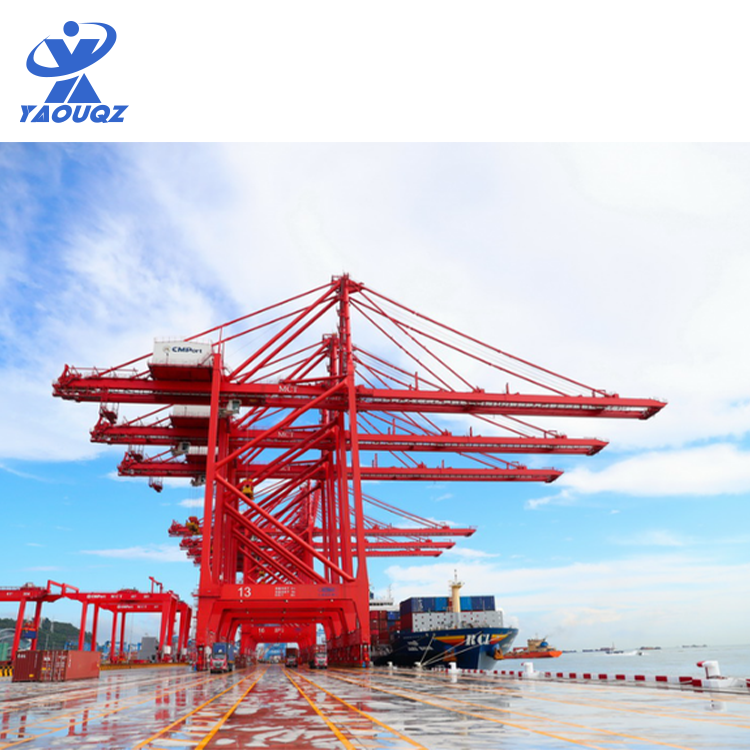
Why Choose Henan Mine Crane STS Cranes?
- Proven quality: ISO 9001, CE and GOST certified production to FEM, DIN and GB standards.
- Custom engineering: Each crane is designed around vessel size, quay layout, throughput and environment.
- Advanced technology: PLC control, anti-sway, variable-frequency drives and automation packages.
- Durable design: Heavy-duty steel structures with corrosion protection for marine conditions.
- Competitive factory-direct pricing: Cost-effective supply from China’s crane manufacturing center.
- Global after-sales service: Installation supervision, commissioning, training and spare-parts support.
- Fast delivery: Typical delivery is 6-12 months for a complete STS crane system.
Frequently Asked Questions
What is the difference between an STS crane and an RTG crane?
An STS crane loads and unloads containers directly from ships at the quay edge and runs on quay rails. A rubber-tyred gantry (RTG) crane operates in the container yard, stacking containers and moving them between yard stacks and internal trucks. In short, STS cranes handle the ship and RTG cranes handle the yard.
How much does a ship-to-shore gantry crane cost?
Cost depends on capacity, outreach, lifting height, automation level and optional features. A standard 50-ton STS crane with 50-meter outreach may range from USD 3 million to USD 8 million, while high-capacity automated dual-trolley cranes for mega-terminals can exceed USD 12-15 million per unit. Henan Mine provides factory-direct quotations based on each project’s technical requirements.
What is the lifespan and maintenance requirement?
A well-maintained STS crane typically serves for 25-30 years, and some units operate for 40 years or more after refurbishment. Maintenance includes daily visual inspections, weekly lubrication, monthly brake and limit-switch checks, quarterly electrical inspections, annual structural and non-destructive testing, and a major overhaul every 5-10 years.
Can STS cranes be automated?
Yes. Henan Mine offers automation-ready configurations ranging from operator-assisted operation to fully remote control. Benefits include faster and more consistent cycles, improved safety, lower operating costs, more precise positioning and reduced container damage. Options include automatic container positioning, anti-collision, ship-profile scanning and remote operator stations.
How long does manufacture and installation take?
The full order-to-commissioning timeline is typically 8-14 months: design and engineering 1-2 months, manufacturing 4-6 months, factory testing 1 month, shipping 1-2 months, on-site erection 2-3 months and commissioning about 1 month.
Contact Henan Mine for Your STS Crane Solution
Whether you need one STS crane for a feeder terminal or a complete automated fleet for a mega-port expansion, Henan Mine can provide the right solution.
Email: sales02@minehenancranes.com
WhatsApp/WeChat: +86 157 3738 0060
Henan Mine Crane Co., Ltd.: Your trusted partner in heavy lifting solutions.