
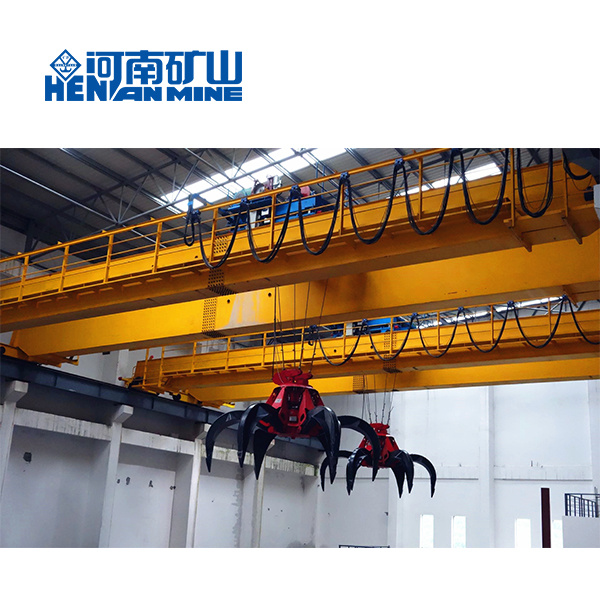
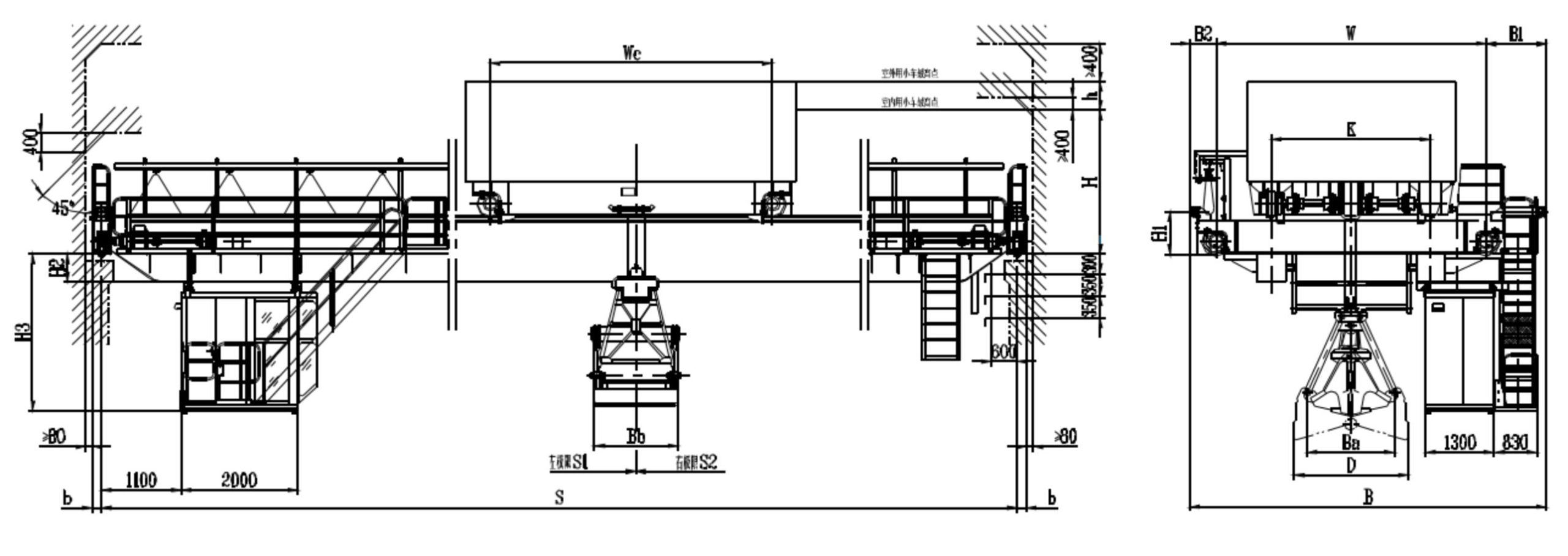
Henan Mine grab overhead cranes are built for continuous indoor handling of coal, sand, gravel, ores, fly ash and other loose bulk materials. A double-girder bridge crane structure, independent lifting trolley and double-rope grab deliver efficient loading, unloading, transport and stacking in demanding industrial environments.
Product Overview
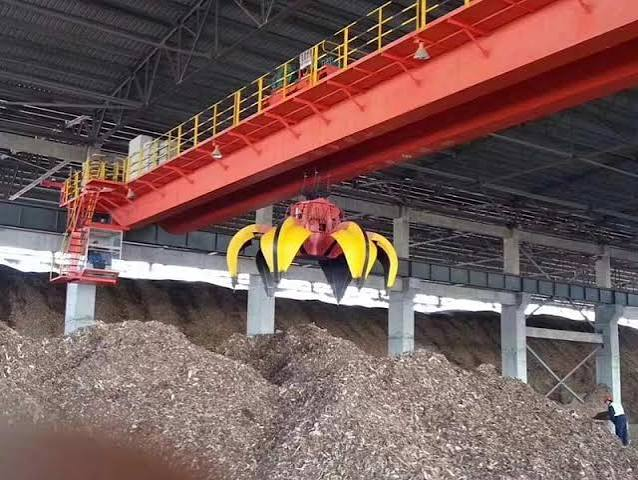
Thermal power plants, cement workshops, mineral-processing plants, coal storage yards and indoor bulk-material warehouses all need reliable equipment for repeated loading, unloading and stockpiling. Unlike a hook overhead crane that lifts individual items, a grab overhead travelling crane directly grabs and discharges loose materials without an additional lifting attachment.
The crane can use a hydraulic grab or wire-rope grab and is designed for heavy-duty continuous operation. Its double-girder main frame, independent grab opening and closing mechanism and electronic control system provide stable movement, high grabbing efficiency and long service life.
Main Application Scenarios
- Thermal power plants: Coal feeding, slag removal and fly-ash transportation.
- Cement plants: Raw-ore stockpiling, clinker handling and waste-residue conveying.
- Mines and mineral-processing plants: Transport of mineral powder, gangue, sand and stone aggregates.
- Indoor port warehouses: Storage, loading and unloading of grain, sand and bulk chemicals.
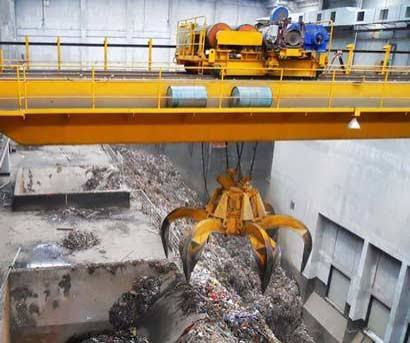
- Solid-waste disposal plants: Sorting and transport of industrial slag and construction waste.
Core Advantages of Henan Mine Grab Overhead Cranes
1. Efficient continuous bulk-material handling
The equipment is designed for A6-A7 heavy metallurgical working class and intermittent cyclic grabbing around the clock. Its handling efficiency is far higher than manual loading or auxiliary hook-crane operation, helping reduce labor cost and maintain stable production.
2. Grab types matched to the material
- Double-jaw wire-rope grab: A general-purpose option for coal, sand, gravel and lump ore.
- Multi-jaw grab: A six-flap design that closes tightly around fine waste residue, metal scraps and powdery materials.
- Hydraulic grab: Stable gripping force for sticky or wet materials.
3. Sturdy double-girder structure
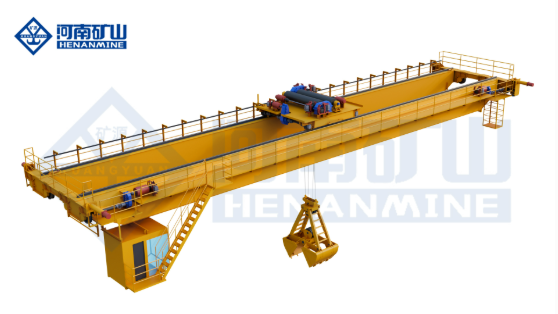
The box-type double main beam uses integral welding for high rigidity and low deflection under full load. Thickened travelling wheels and reducers help the crane withstand long-term heavy-load operation, while the rigid structure reduces vibration during grab lifting.
Grab Overhead Crane Technical Parameters
| Parameter Item | Standard Configuration | Customized Range |
|---|---|---|
| Rated lifting capacity | 10 t / 16 t | 5-32 t |
| Crane span | 16.5 m / 22.5 m | 10.5-31.5 m |
| Standard lifting height | 12 m | 6-18 m |
| Working class | A7 | A5 / A6 / A7 |
| Grab bucket volume | 3 m³ / 5 m³ | 0.5-10 m³ |
| Grab type | Double-jaw wire-rope grab | Multi-jaw or hydraulic grab |
| Control mode | Driving cabin control | Cabin plus wireless remote dual control |
| Power supply | 380 V / 50 Hz / 3 Ph | Local voltage and frequency available |
| Environmental adaptation | Dust-proof motor and electric cabinet | Anti-corrosion treatment optional |
Get a Customized Grab Overhead Crane
Share the bulk material, required capacity, grab volume, span, lifting height, duty cycle, dust level and control preference with Henan Mine. Our engineers can recommend the right grab type, double-girder structure, protection package and control system, then provide an accurate quotation and production schedule.
Contact: Chloe
Tel: +86 18238799707 (same number for WhatsApp)
Email: sales07@minehenancranes.com
FAQs
Can this crane operate in workshops with high dust concentration?
Yes. The motor and electrical control box use sealed, dust-resistant structures with protective covers, making the crane suitable for dusty environments such as coal mines, cement plants and bulk-material warehouses.
What is the difference between a two-jaw grab and a multi-jaw grab?
A two-jaw grab has a large opening and high operating efficiency for raw coal and lump ore. A multi-jaw grab closes more tightly and offers better sealing, making it suitable for fine powders, scattered slag and smaller particles.
How long is the production and delivery cycle?
Standard models generally require 30-40 working days. For customized models, the exact delivery time is confirmed after the technical agreement is signed, with regular production progress updates.